Are All White Food Grade Conveyor Belts the Same?

The short answer is a resounding, “No”. Lightweight food grade conveyor belts are made with almost endless variations of key features which allow them to be custom fit to your unique application. The food in which they convey always plays a critical role in the proper selection of these belts. Some of the variables include:

Cover

Conveyor belt manufacturers can manipulate the thickness, texture, and adhesion of a belt cover for a seemingly endless list of features and benefits to end users.  Matte finishes tend to aid in product release while glossier finishes create more of a suction effect. 

Pro Tip #1: Lightly brushing the pad of your thumb across the surface of multiple belts for comparison is a great way to estimate how your product will react to the surface. 

Pro Tip #2: Your finger nails are another useful tool to feel the difference of how hard or soft different belts feel.  Scratching multiple belt surfaces is the best way to estimate how abrasive applications or belt scrapers may react to a particular belt. 

Compound

Have you ever wondered why some belts crack in oily applications?  Or perhaps, why do some belts have less carry-over of product on the return side of conveyors? Today’s urethanes and PVC materials can be manipulated for non-stick, anti-microbial, or oil resistant applications.

Carcass

The carcass (or plies) of the belt are responsible for the strength, stretch, flexibility, and even how much flour or oil gets absorbed into a belt. In addition to offering one, two, or three ply solutions, various weaves can be supplied for every conveying application.
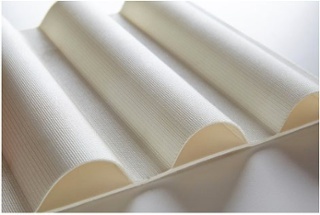
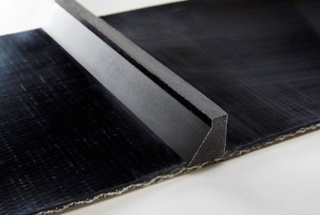
Food Conveyor Belt: Advantages of Using Pillow Cleat Conveyor Belts

Packaging fragile fruits and vegetables is a delicate process. As we all know, tomatoes, apples, and oranges bruise very easily. At the store, cosmetic characteristics of all these products is critical because customers will not buy “ugly food”. Since many of these delicious products are round or odd-shaped, conveying them from bulk shipment bins to the finished package throughout your facility produces a unique challenge

Pillow cleat conveyor belts were invented specifically for processing fruits, vegetables, and eggs. Traditional cleats have sharp corners, are rigid, and destroy soft food as they convey it up necessary incline applications. Pillow cleats on the other hand are soft and conform to your product.  They can be placed on any spacing and are perfect for bulk incline applications or maintaining critical spacing requirements.

Soft Pillow Cleats

Truly Endless Woven Conveyor Belts for Oven Take Conveyors

Oven take-off conveyor belts are one of the most demanding applications in the cookie and cracker industry. When these belts fail, it shuts down the entire production line and costs a tremendous amount of money. Luckily there is a solution which can lead to substantial cost savings!

In multiple instances, Sparks has switched from a silicone impregnated mono filament belt or Solid Woven construction with stitching at the splice to a truly endless woven belt. Oven Take-Off conveyors are riddled with challenges when deciding which belt to select. These conveyors feature 3/8” nose rollers or fixed nose bars, very high temperatures in excess of 230° F, back bends over return rollers, temperamental belt tracking devices, and lots of baking oils. This engineered solution quickly results in tremendous savings continuing to bear fruit year after year.

Truly Endless Woven Conveyor Belts are produced with a variety of weaves, thicknesses, and materials which ultimately affect the absorption capacity and release of the product. For Oven Take-Off conveyors, less absorption is generally recommended to transfer of the small diameter knife edges. Since there is no fabricated splice joint, there is continuous absorption and smooth transfer of the product over the entire length of the belt.

You will need to take the following factors into account when adding up your cost savings for your take off conveyor project:

  • Existing Annual Belt usage (# belts used x cost for each belt)
  • Labor cost (What is your cost for each employee every time your line is down?)
  • Maintenance Cost (How long does it take to change each belt?)
  • Lost Sales (How much product could you have produced if your line were to keep running?)

Truly Endless Woven Belts have been proven to last up to 13 times longer than traditionally spliced conveyor belts.  Savings will vary depending on your facility’s size, capacity, and product.